On and off ramps explained: moving between fiat and stablecoins
An on-ramp turns fiat into stablecoins; an off-ramp turns them back. They are the entry and exit points of stablecoin infrastructure. Here is how they work and what good ramps provide.
Damex, Editorial team3 min read
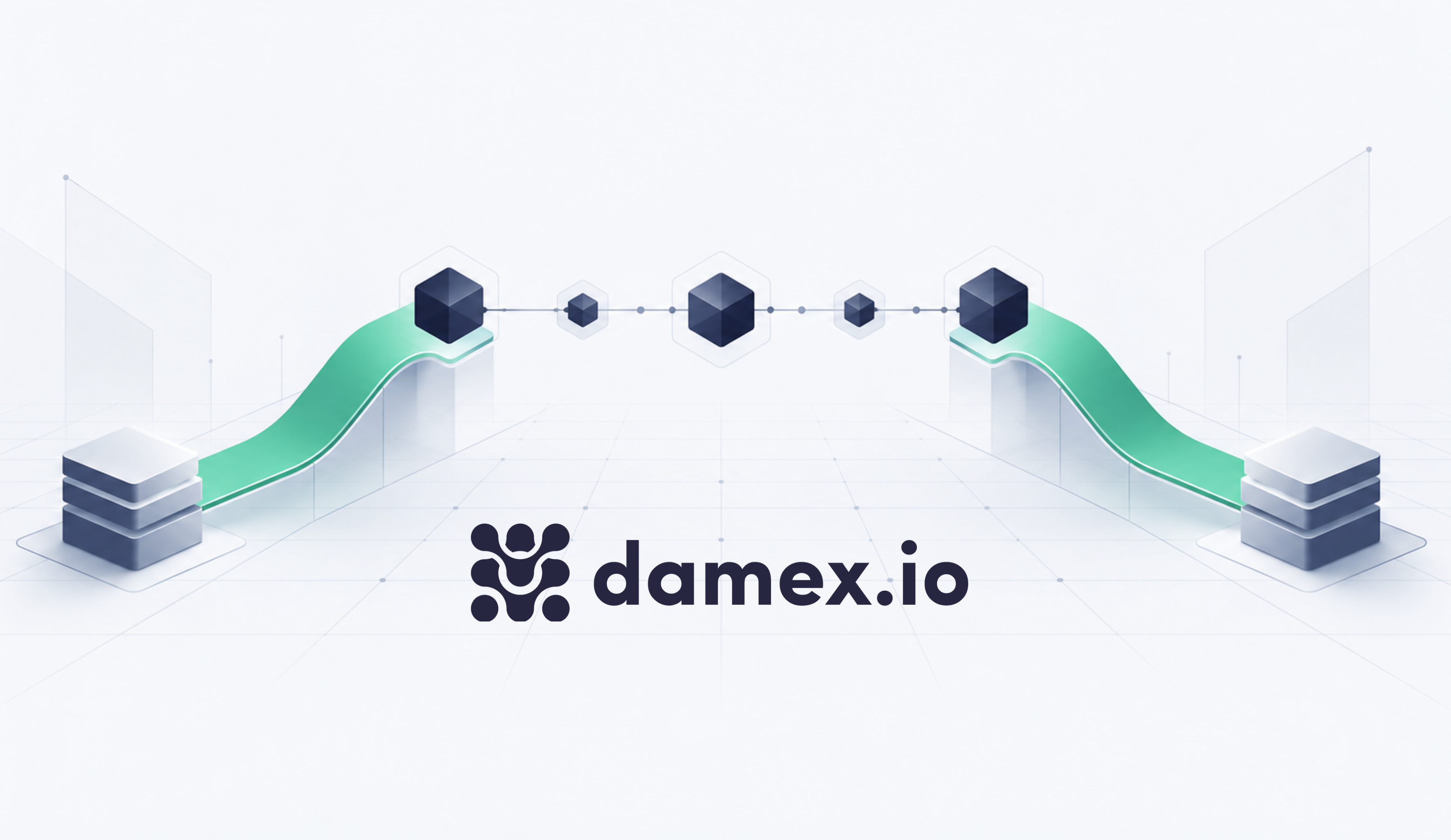
An on-ramp converts fiat into stablecoins, and an off-ramp converts stablecoins back into fiat. Together they are the entry and exit points of stablecoin infrastructure, and they are what let a business move value in and out of stablecoin rails without holding or managing crypto directly.
What an on-ramp is
An on-ramp is the path from fiat into stablecoins. A business sends fiat, and receives the equivalent value in a stablecoin, ready to move over blockchain rails. A good on-ramp handles the conversion, the compliance checks and the funding method behind a single step, so the business does not have to assemble those pieces itself.
What an off-ramp is
An off-ramp is the reverse: from stablecoins back into fiat, delivered into a bank account or payout method. The off-ramp is what turns value moving on-chain into money a recipient can actually spend. In cross-border flows, the off-ramp usually sits in the destination market and converts into the local currency.
Why ramps are the hard part
Moving a stablecoin over a blockchain is the easy part. The difficulty is at the edges, where the crypto and fiat worlds meet. Each ramp needs liquidity to convert without moving the price, banking and payout coverage in the right markets, and compliance with the rules that apply to converting and moving value. This is why coverage and reliability of ramps, not blockchain speed, is usually what decides whether a corridor works in practice.
What good ramp infrastructure provides
- Liquidity deep enough to convert at predictable rates.
- Coverage across the currencies and markets a business needs to reach.
- A regulated framework for the conversion and payout activity.
- An API so ramps can be triggered programmatically inside existing systems.
How platforms embed ramps
For a PSP, fintech or platform, ramps are often something to embed rather than build. Through an API, a platform can offer its own clients the ability to move between fiat and stablecoins, while a regulated provider carries the liquidity, coverage and authorisations underneath. This is what lets a platform add stablecoin capability without becoming a regulated institution itself.
Frequently asked questions
What is the difference between an on-ramp and an off-ramp?
An on-ramp converts fiat into stablecoins. An off-ramp converts stablecoins back into fiat, delivered into a bank account or payout method.
Why are ramps considered the hard part of stablecoin infrastructure?
Because they sit where crypto and fiat meet. Each ramp needs liquidity, banking and payout coverage, and regulatory standing, which are harder to build than the blockchain transfer itself.
Can a platform offer ramps to its own clients?
Yes. Through an API a platform can embed on and off ramps while a regulated provider carries the liquidity, coverage and authorisations, so the platform does not need its own licences.
Does using ramps mean holding crypto?
Not necessarily with regulated infrastructure. The business or platform works through accounts and APIs while the provider handles the underlying assets, conversion and custody.
Disclaimer
This article is for information and discussion purposes only. It does not constitute financial, investment, tax or legal advice, and should not be relied upon as such. Crypto-assets and stablecoins carry risk, including the risk of loss. Availability of Damex services depends on your jurisdiction and is set out in the relevant terms and conditions. Services are provided by different Damex entities under different regulations by region.
Talk to the team building regulated settlement rails
Tell us about your flows and we will map the right Damex setup for your business.