How to integrate stablecoin payments into B2B payment workflows
Integrating stablecoin payments into a B2B workflow means connecting onboarding, accounts, conversion, payouts and reconciliation through an API. Here is the step-by-step path for finance and product teams.
Damex, Editorial team4 min read
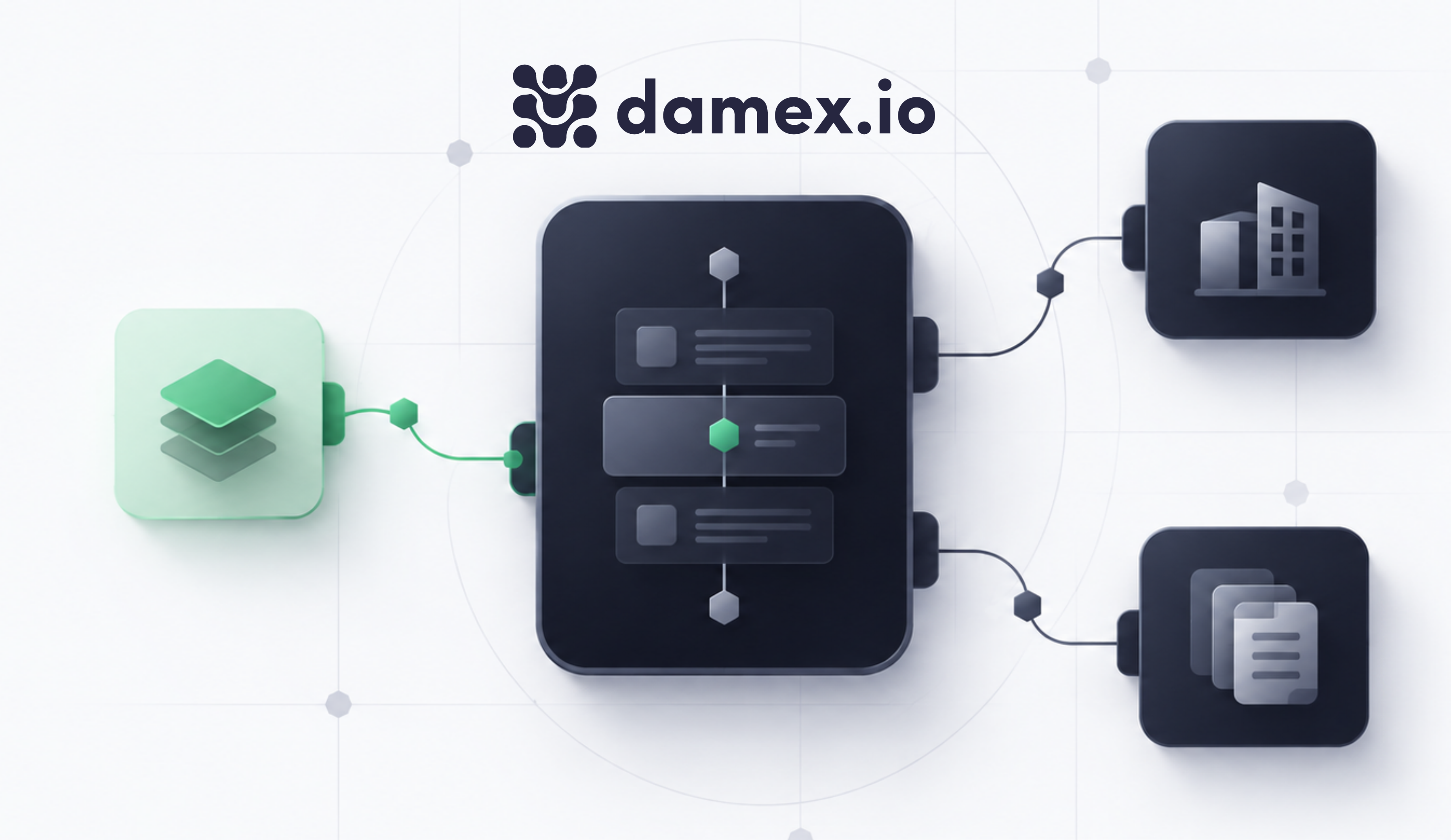
Integrating stablecoin payments into a B2B payment workflow means connecting a few building blocks through an API: onboarding and due diligence, accounts and wallets, conversion between fiat and stablecoins, payout routing, and reconciliation back into existing systems. Done through a regulated provider, a business can add stablecoin payments to its workflow without building wallets, custody or conversion itself.
How to integrate stablecoins into B2B payment workflows
At a high level, the integration has five stages, each exposed through an API so it fits inside an existing product:
- Onboarding and due diligence: complete the provider's onboarding and the compliance checks the activity requires.
- Accounts and wallets: hold fiat and stablecoin balances for the business and, where relevant, its clients.
- Conversion: move between fiat and stablecoins through the provider, using on-ramps and off-ramps.
- Payout routing: send value over stablecoin rails and settle in local fiat at the destination.
- Reconciliation and reporting: feed transaction data back into the finance and treasury systems.
These map onto the wider picture of stablecoin infrastructure: the provider carries the regulated layer while the business integrates the capabilities it needs.
Onboarding steps for a smaller business adding stablecoins
A smaller business adding stablecoins follows the same shape, kept proportionate: complete onboarding and due diligence, open the accounts and wallets it needs, connect the API for conversion and payouts, and set up reconciliation. The point of using a regulated service via API is that the business does not have to build or license the underlying infrastructure to start; it integrates in the Damex environment and keeps its own product and customer experience.
Where the API fits in the workflow
A stablecoin payment API lets a business trigger conversion, settlement and payouts programmatically, inside its existing flow, rather than running a separate system. That is what turns stablecoin payments from a manual process into part of the product: accounts, conversion, payout routing and reporting, all callable through one integration.
What to check before integrating
Check the provider's regulated framework and which entity provides each service, the corridors and currencies covered, the quality and documentation of the API, how conversion and payouts are priced, and how compliance, AML and sanctions screening are handled. The integration is only as good as the infrastructure and the regulatory coverage behind it.
Where Damex fits
Damex provides stablecoin payments, conversion, accounts, payouts and reconciliation as a regulated service via API, so a business can integrate in the Damex environment without building the infrastructure itself. In respect of servicing within the EU, Damex Digital Ltd is authorised by the Malta Financial Services Authority as a Crypto-Asset Service Provider and a Payment Institution under MiCA and the FIA. IBAN and e-money services are provided in conjunction with partners.
Frequently asked questions
How do you integrate stablecoins into B2B payment workflows?
By connecting onboarding and due diligence, accounts and wallets, conversion, payout routing and reconciliation through an API with a regulated provider. The provider carries the rails while the business keeps its own product and customer experience.
What are the onboarding steps for a small business adding stablecoins?
Complete onboarding and due diligence, open the accounts and wallets you need, connect the API for conversion and payouts, and set up reconciliation. A regulated service via API means you do not have to build or license the infrastructure to start.
Do I need a stablecoin payment API to integrate stablecoins?
An API is what lets a business trigger conversion, settlement and payouts inside its existing workflow, rather than running a separate manual process. It is the practical way to make stablecoin payments part of the product.
What should I check before integrating stablecoin payments?
The provider's regulated framework and which entity provides each service, corridor and currency coverage, the API quality and documentation, pricing, and how compliance and screening are handled.
Disclaimer
This article is for information and discussion purposes only. It does not constitute financial, investment, tax or legal advice, and should not be relied upon as such. Crypto-assets and stablecoins carry risk, including the risk of loss. For more information on these risks, see our Risk Notice: EEA and rest of world. Availability of Damex services depends on your jurisdiction and is set out in the relevant terms and conditions. Services are provided by different Damex entities under different regulations by region.
Related reading
Stablecoin payments for FX and remittance companies: 24/7 settlement and liquidity
FX and remittance companies can use stablecoins to settle and manage liquidity around the clock, outside banking hours. Here is how 24/7 settlement, prefunding and local-currency payout work, and how to add the rails without building them.
5 min read
Benefits of stablecoin payments for businesses: 24/7 settlement vs wire transfers
For businesses, stablecoin payments offer around-the-clock settlement, clearer cost visibility and global reach compared with traditional wire transfers. Here is what that means for CFOs and treasury teams.
5 min read
MiCA licence cost and timeline, and the faster alternative
Getting your own MiCA licence takes significant time and capital. Here is what shapes the cost and timeline, and how working with an authorised partner compares.
4 min read
Talk to the team building regulated settlement rails
Tell us about your flows and we will map the right Damex setup for your business.