Embedded stablecoin finance: BaaS and WaaS explained
Embedded finance lets platforms offer accounts, wallets and payments to their own clients through an API. Here is how banking-as-a-service and wallet-as-a-service work with stablecoins.
Damex, Editorial team3 min read
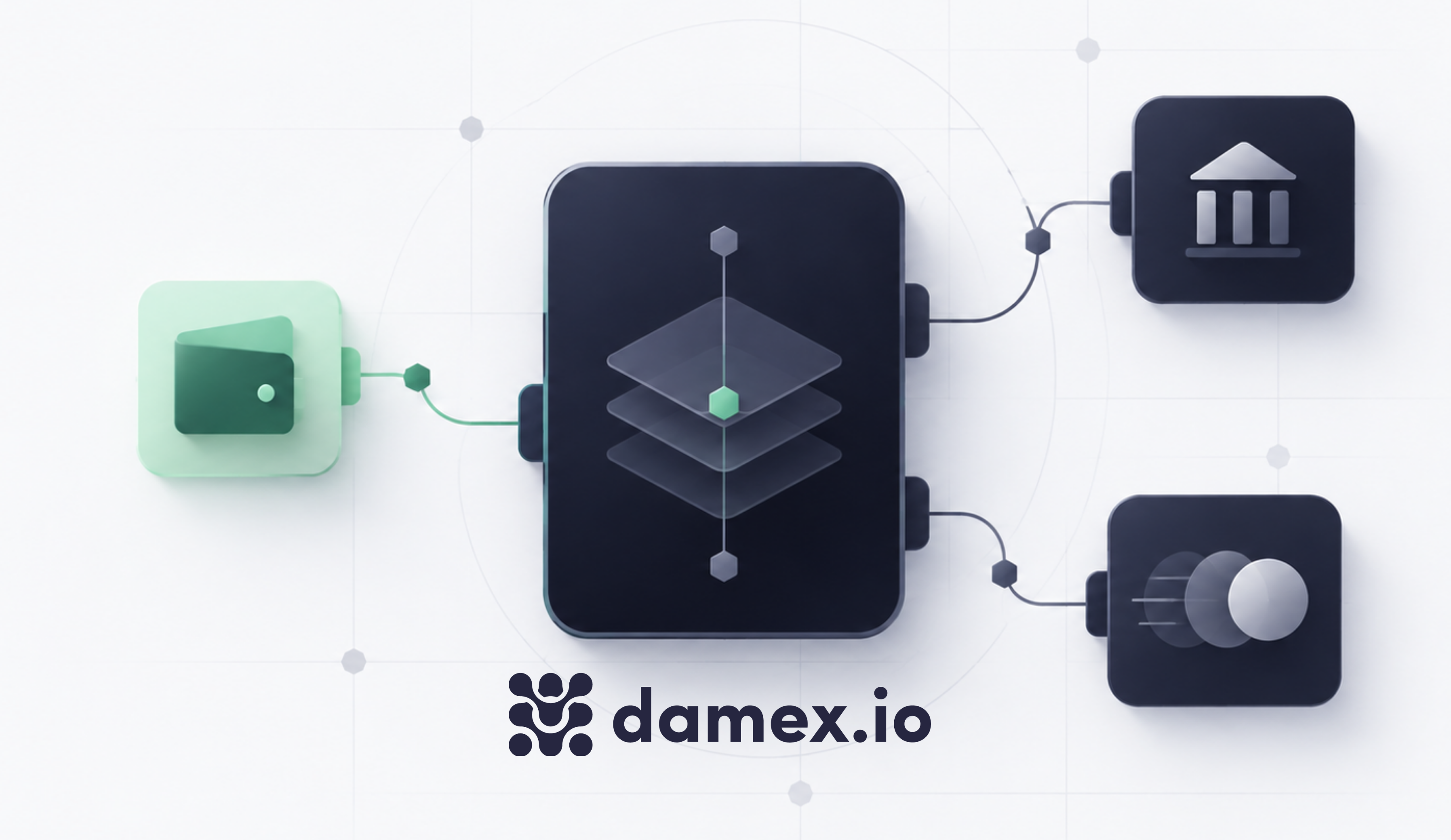
Embedded stablecoin finance lets a platform offer financial products, such as accounts, wallets and payments across fiat and stablecoins, directly inside its own product, through an API. Banking-as-a-service (BaaS) and wallet-as-a-service (WaaS) are the two building blocks: BaaS provides the account and payment layer, WaaS provides the wallet and custody layer, and the platform integrates both without becoming a regulated institution itself.
What BaaS and WaaS mean
- Banking-as-a-service (BaaS): access to accounts, IBANs and payment rails through an API, so a platform can let its clients hold and move fiat.
- Wallet-as-a-service (WaaS): access to wallet and custody infrastructure through an API, so a platform can let its clients hold and move stablecoins, with the underlying custody handled by the provider.
Together they let a platform present a single experience where fiat and stablecoins live side by side.
How embedding works in practice
The platform integrates the provider's API rather than building or licensing the underlying capability. Through that API it can create accounts for its clients, issue wallets, run on and off ramps between fiat and stablecoins, route treasury flows, and orchestrate payments. The regulated provider carries the accounts, custody and regulatory coverage underneath.
What this lets a platform offer
- Fiat and stablecoin accounts for its own clients.
- IBAN accounts, where available under the relevant framework.
- Multi-wallet infrastructure and regulated stablecoin custody.
- On and off ramps between fiat and stablecoins.
- Treasury routing and payment orchestration.
Why platforms embed rather than build
Building this directly means obtaining authorisations, standing up custody, and integrating liquidity and conversion, each a significant undertaking. Embedding lets a platform offer the same capabilities through one integration, while the regulated provider holds the licences and infrastructure. It shortens time to launch and keeps the regulatory burden with the party built to carry it.
Who this is for
Embedded stablecoin finance fits PSPs, fintechs and platforms that already serve business clients and want to add fiat and stablecoin capabilities without becoming a regulated institution. It is the API-first path into stablecoin infrastructure.
Frequently asked questions
What is embedded stablecoin finance?
It is offering financial products across fiat and stablecoins, such as accounts, wallets and payments, inside your own platform through an API, while a regulated provider carries the accounts, custody and licences underneath.
What is the difference between BaaS and WaaS?
BaaS provides the account and payment layer for fiat through an API. WaaS provides the wallet and custody layer for stablecoins. Platforms often combine both to offer fiat and stablecoins together.
Does a platform need its own licence to embed these services?
Generally no. The regulated provider holds the authorisations and infrastructure, and the platform integrates through an API. The exact arrangement depends on the services and jurisdictions involved.
What can a platform offer through embedded stablecoin finance?
Fiat and stablecoin accounts, IBANs where available, wallets and custody, on and off ramps, treasury routing and payment orchestration, all through one integration.
Disclaimer
This article is for information and discussion purposes only. It does not constitute financial, investment, tax or legal advice, and should not be relied upon as such. Crypto-assets and stablecoins carry risk, including the risk of loss. Availability of Damex services depends on your jurisdiction and is set out in the relevant terms and conditions. Services are provided by different Damex entities under different regulations by region.
Related reading
VASP licence vs CASP licence: what changed under MiCA
VASP registration was the old national model; a CASP authorisation is the MiCA model. Here is the difference, and what it means for a business that held a VASP registration before MiCA.
4 min read
SWIFT alternatives for B2B cross-border payments
SWIFT is not the only way to move money across borders. Here are the main alternatives for B2B payments, how they differ, and when each one makes sense.
4 min read
MiCA passporting explained: one authorisation, the whole EU
MiCA passporting lets a firm authorised in one EU member state provide its services across the others. Here is how it works and why it matters for market access.
3 min read