MiCA passporting explained: one authorisation, the whole EU
MiCA passporting lets a firm authorised in one EU member state provide its services across the others. Here is how it works and why it matters for market access.
Damex, Editorial team3 min read
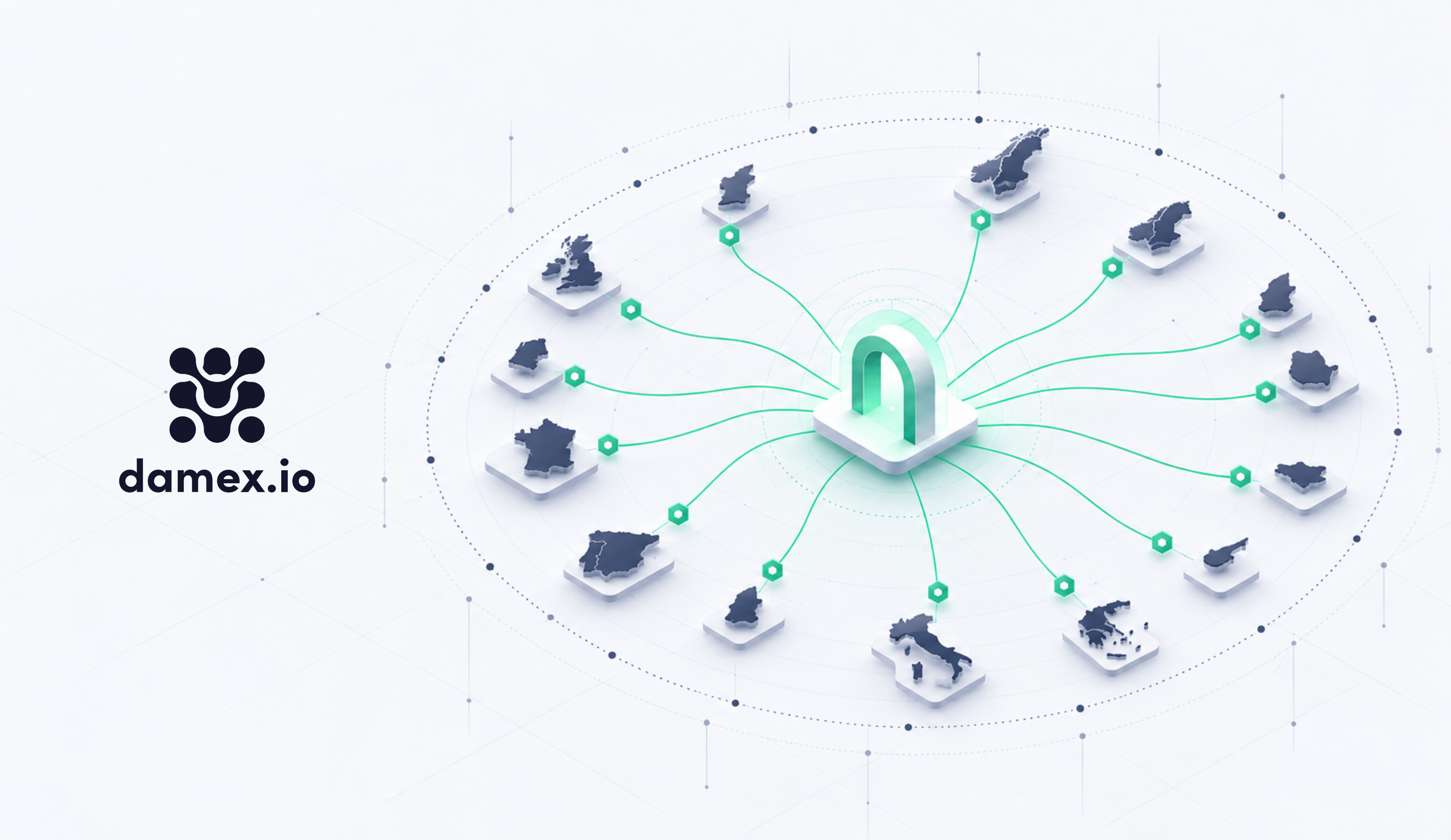
MiCA passporting is the mechanism that lets a crypto-asset service provider authorised in one EU member state offer its services across the other member states, without a separate authorisation in each. It is what turns a single national authorisation into access to the whole EU market, and it is one of the main reasons MiCA matters: authorise once, serve the single market.
How passporting works
A firm applies for authorisation in one member state, its home state. Once authorised, it can notify the regulator of the other member states where it intends to operate and then provide its services there under its home authorisation. The supervision stays primarily with the home regulator. The practical effect is that a provider does not need twenty-seven separate authorisations to serve the EU; one authorisation, passported, covers the single market.
Why passporting matters for market access
Before MiCA, a firm often had to deal with a patchwork of national regimes to operate across Europe. Passporting replaces that with a single route: authorise in one member state and passport across the rest. For a business weighing how to reach the EU, this is central, because it means the value of an authorisation, whether your own or a partner's, is EU-wide, not limited to one country.
Passporting and the partner route
Passporting is also what makes the MiCA-authorised partner model powerful. A partner authorised in one member state and passported across the EU can offer EU-wide reach. So a business working through an authorised partner can access the single market through the partner's passported authorisation, rather than obtaining and passporting its own. The trade-offs between the two routes are in our comparison of a MiCA licence versus a MiCA partner.
Where Damex fits
In respect of servicing within the EU, Damex Digital Ltd is authorised by the Malta Financial Services Authority as a Crypto-Asset Service Provider and a Payment Institution under MiCA and the FIA. Malta is its home member state within the EU framework.
Frequently asked questions
What is MiCA passporting?
It is the mechanism that lets a crypto-asset service provider authorised in one EU member state provide its services across the other member states, without a separate authorisation in each.
Do I need a licence in every EU country?
No. That is the point of passporting. One authorisation in a home member state, passported to the others, covers the EU single market.
Who supervises a passported firm?
Supervision stays primarily with the home member state's regulator, the one that granted the authorisation.
How does passporting relate to using a partner?
A MiCA-authorised partner that is passported across the EU can offer EU-wide reach, so a business can access the single market through the partner rather than obtaining and passporting its own authorisation.
Disclaimer
This article is for information purposes only and does not constitute financial, investment, tax or legal advice. Crypto-assets and stablecoins are high risk. Their value can go down as well as up and you may lose the full value. Stablecoins, including e-money tokens and asset-referenced tokens, may lose their peg, and redemption rights are generally against the issuer, not Damex. Crypto-asset services are not covered by deposit guarantee or investor compensation schemes. In the EEA, crypto-asset services are provided by Damex Digital Ltd, authorised by the Malta Financial Services Authority as a CASP under MiCA (EU) 2023/1114. Crypto-asset services and payment services are provided under separate regulatory frameworks. Availability depends on your jurisdiction and is set out in the relevant terms and conditions.
Related reading
How to integrate stablecoin payments into B2B payment workflows
Integrating stablecoin payments into a B2B workflow means connecting onboarding, accounts, conversion, payouts and reconciliation through an API. Here is the step-by-step path for finance and product teams.
4 min read
Benefits of stablecoin payments for businesses: 24/7 settlement vs wire transfers
For businesses, stablecoin payments offer around-the-clock settlement, clearer cost visibility and global reach compared with traditional wire transfers. Here is what that means for CFOs and treasury teams.
5 min read
Stablecoin payments for FX and remittance companies: 24/7 settlement and liquidity
FX and remittance companies can use stablecoins to settle and manage liquidity around the clock, outside banking hours. Here is how 24/7 settlement, prefunding and local-currency payout work, and how to add the rails without building them.
5 min read
Talk to the team building regulated settlement rails
Tell us about your flows and we will map the right Damex setup for your business.